Contango and Backwardation
Contango is when distant-expiry futures cost more than near-expiry ones — the normal state for most commodities due to storage and financing costs. Backwardation is the opposite: distant futures cost less than near ones — a signal of current scarcity or high short-term demand. Curve shape matters most for buy-and-hold strategies and anyone using commodity ETFs.
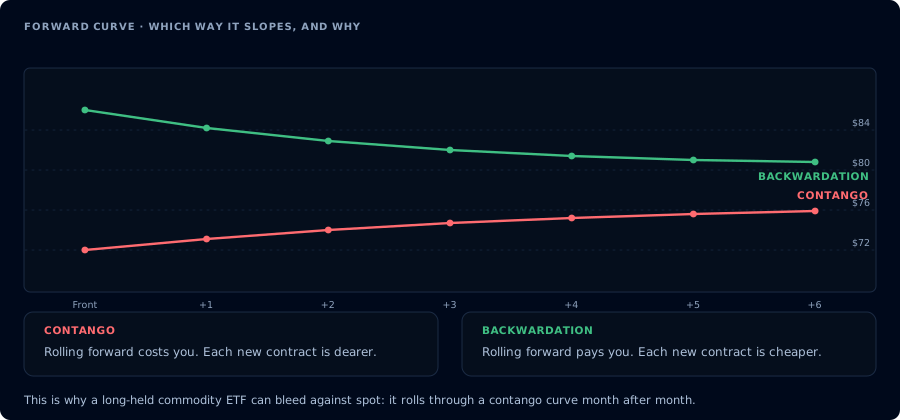
Which way the forward curve slopes decides whether rolling costs you or pays you.
The terms, plainly
Every futures market has a curve — the series of prices across expirations (front month, next month, further out, etc.). The shape of that curve tells you something about the market's supply-demand balance.
- Contango: prices rise as you go further out in time (later-dated contracts cost more)
- Backwardation: prices fall as you go further out (later-dated contracts cost less)
Example — a contango curve in crude oil:
| Month | Price |
|---|---|
| May 2026 | $80.00 |
| Jun 2026 | $80.50 |
| Jul 2026 | $80.95 |
| Aug 2026 | $81.35 |
Example — a backwardation curve:
| Month | Price |
|---|---|
| May 2026 | $85.00 |
| Jun 2026 | $84.20 |
| Jul 2026 | $83.50 |
| Aug 2026 | $82.85 |
Why contango is "normal"
For most commodities, storage costs money. If you own a thousand barrels of oil today and someone wants to buy them for delivery in six months, you'd charge them more than spot to cover:
- Warehousing / storage rent
- Insurance
- Financing (the cost of capital tied up in inventory)
That premium shows up as a rising futures curve. In quiet markets, commodity futures are almost always in mild contango.
Why backwardation happens
Backwardation emerges when current demand dwarfs future demand, or when supply is constrained right now:
- A geopolitical crisis threatens immediate oil supply → front-month crude spikes above later months
- A refinery outage makes this-month gasoline scarce → backwardated gasoline curve
- A drought raises current-season wheat above next-season wheat
Backwardation is a market shouting "get product now, not later." It's the curve shape that often precedes trending moves as demand clears.
Equity index futures don't really have contango/backwardation
Equity index futures (ES, NQ) price primarily via the cost of carry formula: spot + interest − expected dividends. The front-month vs. back-month difference in ES is small and predictable.
Contango/backwardation terminology mainly matters for commodities (oil, metals, ags) and occasionally currency or interest rate futures.
Why curve shape matters for retail traders
1. Rollover cost. When you roll a long position in a contango market, you sell the cheaper front month and buy the more expensive next month. That's a loss. Over months of rolling, contango drag compounds — sometimes called "negative roll yield."
2. Commodity ETFs bleed in contango. Oil ETFs like USO hold rolling futures contracts. In persistent contango, they systematically lose value even if spot oil is flat. This is why XLE (equity ETF) beats USO (futures ETF) over most long windows.
3. Signal for regime change. A commodity curve flipping from contango to backwardation is a high-signal event. It often precedes directional moves.
Calculating roll yield
Roll Yield = (Front Month Price / Back Month Price − 1) × (annualization factor)
Positive roll yield (backwardation) = you're paid to roll. Negative (contango) = you pay to roll.
Over years of rolling, even a small negative roll yield compounds to meaningful drag. This is why long-only commodity strategies underperform commodity-equity strategies so often.
Contango "supercontango"
Occasionally, markets go to extreme contango — typically during supply gluts or demand collapses. April 2020 crude oil famously hit negative prices on the front month because storage was full while back months still showed positive prices. That's "supercontango" — a rare, tradeable regime.
Supercontango creates opportunities (and risks) in calendar spread strategies: sell front, buy back month, wait for the curve to normalize. Professional traders do this with specific margin structures; retail traders should be cautious because calendar margin requirements can spike violently.
Impact on CrossTrade automation
For most CrossTrade users, curve shape has minimal direct impact — you're trading a specific contract month for its duration. But a few considerations:
- Rollover — if your strategy has an intended holding period that spans expiration, plan for the roll. See Contract rollover.
- Don't use continuous-contract signals for back-month execution — TradingView's ES1! signals should route to ES front month, not to ESZ (December) just because that's what you chose.
- Commodity strategies may be more sensitive — a long-term crude strategy backtested without modeling roll costs will significantly over-estimate returns.
Frequently Asked Questions
What does contango mean in trading?
Contango is when futures prices rise as you go further out in time — the distant-expiry contract costs more than the near-term one. It reflects storage, insurance, and financing costs in commodity markets and is the 'normal' state for most commodity futures curves.
Is backwardation bullish or bearish?
Backwardation is typically bullish for the commodity because it signals current demand exceeding near-term supply. Persistent backwardation often precedes or accompanies rising spot prices. Not a guarantee — but a strong signal that should be on any commodity trader's radar.
Why do oil ETFs lose money in contango?
ETFs like USO hold rolling futures contracts. In contango, each roll sells the cheaper front month and buys the more expensive back month — a systematic loss. Over time, this 'roll yield drag' can cause the ETF to lose value even when spot oil is flat or rising modestly.
Does contango affect equity index futures?
Only slightly. ES and NQ are priced via cost of carry (interest rates minus expected dividends), producing a small, predictable premium in back months. The dramatic contango/backwardation moves typical of commodities rarely occur in equity index futures.