Ichimoku Cloud Explained Simply
Ichimoku Kinko Hyo ("one-glance equilibrium chart") is a Japanese indicator that stacks five lines on the chart to show trend, momentum, and support/resistance simultaneously. The two most important elements are the Kijun-sen (26-period midline = bias line) and the cloud formed by Senkou A and Senkou B (future support/resistance zone). Price above the cloud = bullish regime; below = bearish; inside = chop.
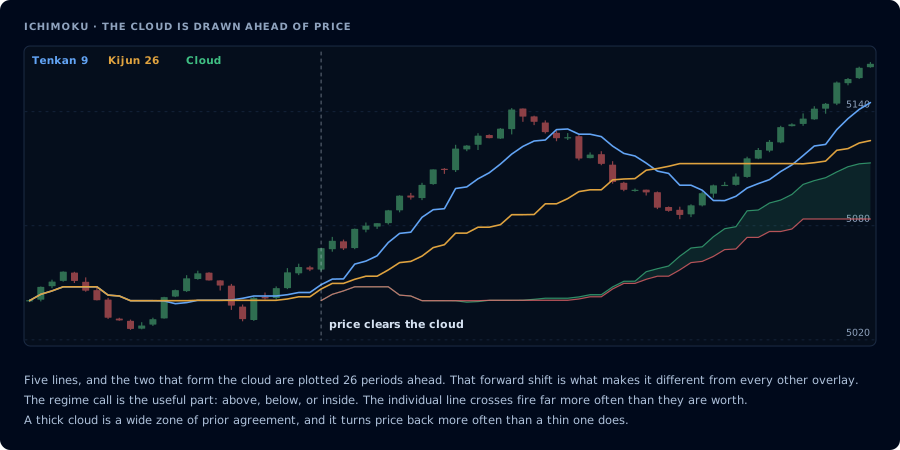
The cloud is plotted 26 periods ahead. Above, below or inside is the useful read.
The five lines
| Line | Formula | Role |
|---|---|---|
| Tenkan-sen (Conversion) | (9-period high + low) / 2 | Fast line — short-term equilibrium |
| Kijun-sen (Base) | (26-period high + low) / 2 | Slow line — primary bias |
| Senkou Span A | (Tenkan + Kijun) / 2, plotted 26 bars forward | One edge of the cloud |
| Senkou Span B | (52-period high + low) / 2, plotted 26 bars forward | Other edge of the cloud |
| Chikou Span | Close price, plotted 26 bars back | Momentum confirmation |
What to actually watch
New Ichimoku users drown in five lines. Start with these three signals:
1. Price vs. cloud. Above = bullish regime, trade longs only. Below = bearish, shorts only. Inside = no-trade zone.
2. Cloud color. When Senkou A is above Senkou B, the cloud is "bullish" (green). When below, "bearish" (red). A color flip signals regime change.
3. Tenkan/Kijun cross. Tenkan crossing above Kijun = bullish momentum; below = bearish. Stronger when it happens above the cloud for longs, below for shorts.
Everything else is nuance.
Settings
Default: 9, 26, 52. These come from the 1960s Japanese trading week (6 days × several weeks). They work.
Some modern traders use 20, 60, 120 to align with the 5-day Western week. Ichimoku purists will yell at you for this. It works about as well.
Ichimoku in Pine Script (v6)
//@version=6
indicator("Ichimoku Cloud + Alerts", overlay=true)

conv  = input.int(9,  "Tenkan (Conversion)")
base  = input.int(26, "Kijun (Base)")
lagB  = input.int(52, "Senkou B")
displ = input.int(26, "Displacement")

tenkan = (ta.highest(high, conv) + ta.lowest(low, conv))   / 2
kijun  = (ta.highest(high, base) + ta.lowest(low, base))   / 2
senkA  = (tenkan + kijun) / 2
senkB  = (ta.highest(high, lagB) + ta.lowest(low, lagB)) / 2

plot(tenkan, color=color.blue,   title="Tenkan")
plot(kijun,  color=color.red,    title="Kijun")
p1 = plot(senkA, color=color.green, offset=displ,     title="Senkou A")
p2 = plot(senkB, color=color.red,   offset=displ,     title="Senkou B")
fill(p1, p2, color=senkA > senkB ? color.new(color.green, 80) : color.new(color.red, 80))
plot(close, color=color.gray, offset=-displ, title="Chikou")

// Core signals
cloudTop = math.max(senkA, senkB)
cloudBot = math.min(senkA, senkB)

longSignal  = ta.crossover(tenkan, kijun)  and close > cloudTop
shortSignal = ta.crossunder(tenkan, kijun) and close < cloudBot

if longSignal
    alert("Ichimoku bullish cross above cloud", alert.freq_once_per_bar_close)
if shortSignal
    alert("Ichimoku bearish cross below cloud", alert.freq_once_per_bar_close)
Common mistakes
- Looking at all five lines equally. Price vs. cloud matters more than anything else. Start there.
- Using Ichimoku on fast timeframes. It's designed for daily and 4-hour charts. On 1-minute futures, the lines become a spaghetti mess.
- Ignoring displacement. Senkou A/B are plotted 26 bars forward. The cloud you see at the current bar was computed 26 bars ago — this is intentional, but it confuses new users.
Automating Ichimoku with CrossTrade
Build the script above as a strategy() and route signals through the standard CrossTrade payload. Because Ichimoku is best on higher timeframes, alert frequency will be low — set alert.freq_once_per_bar_close to avoid intra-bar whipsaws.
Frequently Asked Questions
Is Ichimoku good for day trading?
Less than it looks. Ichimoku was designed for daily charts and higher. On 1-minute or 5-minute futures, the lines whipsaw constantly. If you want to day-trade with it, stick to the 15-minute and higher.
What does the Ichimoku cloud represent?
The area between Senkou A and Senkou B, projected 26 bars into the future. It functions as dynamic support and resistance — thicker clouds tend to hold, thinner clouds break easily.
What's a good Ichimoku signal?
The high-probability setup is a Tenkan/Kijun bullish cross that occurs above a bullish (green) cloud, with the Chikou span above price from 26 bars ago. All three aligned filters for trades.
Do I need all five Ichimoku lines?
Start with three: price vs. cloud, Tenkan/Kijun cross, and cloud color. Most traders eventually drop the Chikou span because it's the slowest confirmation. You can build a complete Ichimoku system with just cloud + Tenkan + Kijun.